T Gel Original Formula . Typically i just by the walmart brand (equate) dandruff shampoo. Download shampoobd app for android. Gelish Rendezvous Swatch KISS from elizzabethby.wordpress.com The shampoo contains coal tar, a controversial active ingredient because it contains hundreds of active ingredients in itself. Proven effectiveness of 2% neutar®, solubilized coal tar extract. Controls symptoms of dandruff, seborrheic dermatitis, psoriasis.
Fixed Overhead Applied Formula. To cross verify the answer, we need to add fixed overhead capacity variance and fixed overhead efficiency variance. = $3 million (unfavorable) the variance is unfavorable because the actual spending was higher than the budget.
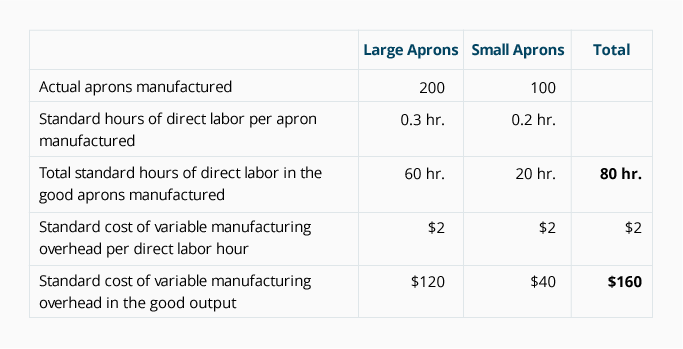
Variable Overhead Standard Cost and Variances AccountingCoach from www.accountingcoach.com
Standard fixed overheads = budgeted fixed overheads ÷ budgeted production. $50 / 2 = $25. Fixed overhead total variance is the difference between actual and absorbed fixed production overheads over a period.
Fixed Overhead Budget Variance Formula.
Here’s a formula that can help simplify this calculation: These costs are needed in order to operate a business. The cost object refers to the specific business component that you calculate costs for, such as a product or a service.
Unlike Fixed Costs, Variable Costs Vary With The Level Of Production.
Standard fixed overheads = budgeted fixed overheads ÷ budgeted production. If one product takes 100 machine hours and another product requires 200 machine hours, then the applied overhead is $10,000 for the first product and $20,000 for the second product. A factory was budgeted to produce 2,000 units of output @ one unit per 10 hours productive time working for 25 days.
Fixed Overhead Capacity Variance =.
Aamreli steels is a manufacturing company that has a budgeted fixed overhead expense and output of $5,000,000 and 500,000 units respectively for the year ended 2019. Allocated manufacturing overhead = total overhead costs / total hours worked or total hours machine was used. The standard overhead cost formula is:
Simply Using The Variable Costs Of Direct Materials And Labor Is Not Enough When Calculating The True Cost Of Production.
The total over absorption is $5,000. The first step is to identify the cost object you allocate the applied overhead to during accounting. The factory worked for 26 days putting in 860 hours work every day and achieved an output of 2,050 units.
If Your Overhead Allocation Rate Is $100 Per Machine Hour, Then Multiply $100 Times The Number Of Machine Hours For A Particular Product To Get Its Applied Overhead.
The actual fixed overhead expenses for the year 20x3 were $40 million. Overhead allocation rate = total overhead / total direct labor hours = $100,000 / 4,000 hours = $25.00. Now we can apply the formula to calculate the fixed overhead total variance as follows:


Comments
Post a Comment